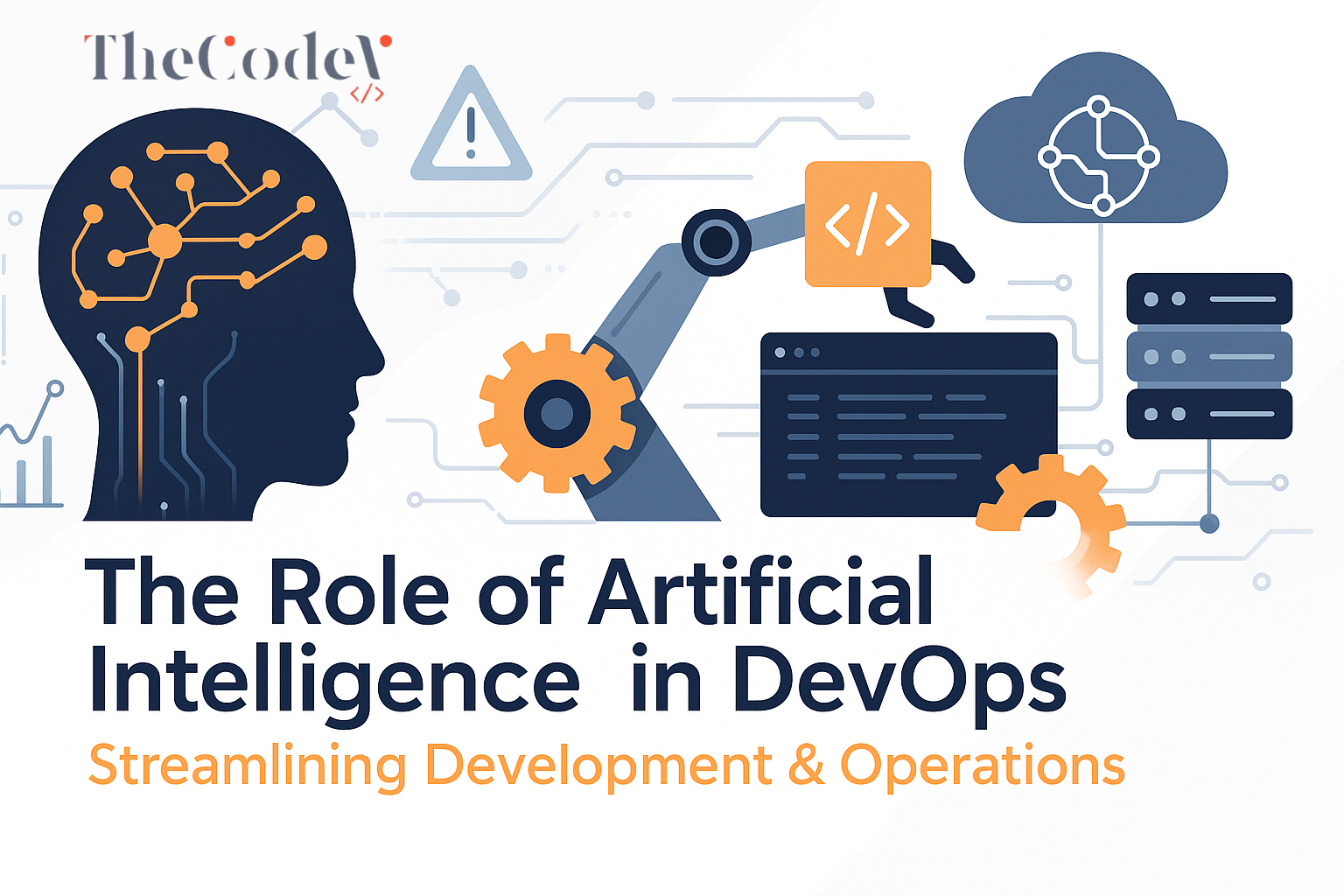
The Role of Artificial Intelligence in DevOps: Streamlining Development & Operations
In today’s digital era, the complexity of modern software delivery pipelines is expanding at an unprecedented rate. From integrating continuous deployment tools to managing microservices and cloud-native architectures, development teams are constantly navigating a labyrinth of technologies and time-sensitive processes. It’s in this intricate and ever-evolving landscape that Artificial Intelligence in DevOps is proving to be a transformative force—helping teams not just keep up, but thrive.
As software systems scale in scope and sophistication, traditional DevOps strategies often struggle to maintain efficiency, reliability, and speed. This is where AI steps in. By intelligently automating tasks, detecting anomalies, predicting incidents, and optimising workflows, AI is enabling DevOps teams to streamline operations and make data-driven decisions in real time. It reduces the cognitive load on developers and system administrators, minimises downtime, and enhances the overall quality of software delivery.
At TheCodeV, we are at the forefront of helping businesses worldwide integrate AI into their DevOps pipelines. Our team of experts works closely with organisations to build smart, adaptive systems that blend machine learning with engineering best practices—transforming how development and operations collaborate. Whether you’re a startup building your first CI/CD pipeline or an enterprise managing multi-cloud deployments, TheCodeV brings the intelligence needed to stay ahead.
To learn more about our mission and impact, visit our About Us page and discover how we’re reshaping the future of software delivery with AI-powered solutions.
What is the DevOps Lifecycle?
The DevOps lifecycle encapsulates a continuous, iterative process that integrates software development (Dev) with IT operations (Ops), fostering collaboration, speed, and quality across every stage of application delivery. This lifecycle is typically divided into eight key phases: planning, coding, building, testing, releasing, deploying, operating, and monitoring. When executed effectively, it supports continuous integration and continuous delivery (CI/CD)—the backbone of modern, agile software delivery models.
1. Planning
In the initial phase, teams define project requirements, user stories, and technical goals. Without AI, this stage often relies on manual inputs, making it prone to misaligned expectations and delayed feedback loops.
2. Coding
Developers begin writing code based on planning insights. Traditional codebases can suffer from inconsistencies, duplication, and lack of standardisation—especially in fast-paced environments with distributed teams.
3. Building
The code is compiled and assembled into deployable units. Without intelligent build tools, teams face challenges like broken builds, inefficient resource use, and integration conflicts that delay progress.
4. Testing
Manual or scripted tests are executed to identify bugs and vulnerabilities. However, test coverage gaps and long regression cycles hinder rapid iteration and increase the risk of errors slipping into production.
5. Releasing
Code is prepared for deployment in staging or production environments. Without automation, this step can become bottlenecked by complex approval chains and compliance checks.
6. Deploying
Deployment puts new code into live environments. Non-AI-driven deployment processes are susceptible to human error, version conflicts, and service disruptions.
7. Operating
Teams manage the health and performance of applications post-deployment. Manually monitoring logs and system behaviours slows down incident response and root cause analysis.
8. Monitoring
In this final phase, teams continuously collect data to evaluate application performance and user experience. Traditional tools often provide reactive—not proactive—insights, making it hard to predict or prevent issues.

The Pre-AI Challenge
Each phase of the DevOps lifecycle, though interconnected, has historically involved siloed tools and manual interventions. This not only slows down the DevOps pipeline automation efforts but also creates friction between development and operations teams.
Now, imagine an intelligent system that can analyse vast amounts of data, detect patterns, and automate decisions across this entire pipeline. That’s the promise of AI in DevOps—a subject we’ll dive deeper into in the upcoming sections.
To explore how we help businesses optimise each stage of the DevOps lifecycle with smart tools and strategies, visit our Digital Services page. If you’re ready to elevate your CI/CD process with intelligent automation, feel free to contact us today.
AI-Powered CI/CD: Smarter Pipelines, Faster Delivery
Continuous Integration and Continuous Deployment (CI/CD) is the heartbeat of modern DevOps—ensuring that software updates are rapidly developed, tested, and deployed with minimal human intervention. However, traditional CI/CD pipelines can become sluggish, error-prone, and resource-intensive without intelligent oversight. That’s where Artificial Intelligence in DevOps makes a compelling entrance.
Smarter Build Management with AI
AI revolutionises build automation by learning from historical pipeline data to predict build failures before they happen. Instead of relying solely on static scripts, AI-enhanced systems dynamically allocate compute resources, prioritise critical builds, and reduce unnecessary ones. For example, companies using Jenkins with ML plugins can now predict flaky tests and rerun only the necessary test cases, saving hours of compute time and reducing pipeline bloat.
Similarly, GitHub Actions, when combined with machine learning, can prioritise test cases based on code coverage history and known breakpoints—ensuring faster, more efficient build cycles. These intelligent systems enable development teams to iterate more rapidly without compromising code quality or performance.
Auto-Debugging and Root Cause Analysis
One of the biggest hurdles in CI/CD is identifying the root cause of failed builds. AI-powered debugging tools can automatically analyse logs and configuration files to pinpoint the exact lines of code or misconfigurations that caused the failure. Instead of sifting through hundreds of lines of logs, developers receive concise, context-aware alerts.
A notable real-world example comes from Atlassian, which integrated AI-driven predictive diagnostics into Bitbucket Pipelines. This feature uses machine learning to detect common failure patterns across thousands of builds, helping teams resolve issues before they even push to production Read More →.
Accelerated and Safer Deployment Decisions
AI also optimises the deployment process. By analysing real-time system health metrics, user traffic patterns, and past deployment data, AI can recommend or even trigger optimal deployment windows. This ensures minimal user disruption and maximum system stability.
Some advanced systems are now capable of adaptive rollout strategies—where the deployment pace adjusts automatically based on user feedback and system performance. For example, if error rates spike post-deployment, the AI can halt further rollout and trigger an auto-revert, preserving uptime.
Real Impact, Real Speed
With AI-powered CI/CD, businesses move from reactive DevOps to proactive, self-healing pipelines. This not only reduces downtime but also accelerates feature delivery, giving companies a competitive edge.
At TheCodeV, we help UK and global clients integrate these AI-enhanced CI/CD solutions into their software development workflows. Whether you’re using Jenkins, GitHub Actions, or cloud-native CI/CD services, our team can assist in creating pipelines that learn, adapt, and deliver faster.
Ready to optimise your software delivery with intelligent CI/CD? Book a free consultation with our DevOps experts today.
Predictive Intelligence: Reducing DevOps Failures Before They Happen
One of the most significant breakthroughs introduced by Artificial Intelligence in DevOps is its ability to predict and prevent failures before they impact the end user. In high-velocity software environments, a single unnoticed anomaly can escalate into costly downtime, security breaches, or SLA violations. With predictive analytics, AI transforms DevOps from a reactive process into a proactive and resilient system.
How AI Predicts Risks in DevOps Pipelines
AI models trained on historical deployment data, incident reports, performance logs, and system metrics can detect subtle patterns that typically precede failures. These insights are then used to generate real-time risk scores for new releases or infrastructure changes.
For example, if a new deployment introduces latency spikes similar to those seen before a past outage, the AI system can immediately flag the release, advise rollback, or initiate a staged rollout with enhanced monitoring. This not only reduces failure rates but also ensures better decision-making under pressure.
Additionally, anomaly detection algorithms continually monitor runtime behaviour, alerting teams when metrics deviate from expected baselines. These early warnings give DevOps engineers time to act before small issues turn into full-blown incidents.
AI-Enhanced Rollback and SLA Protection
Predictive analytics plays a critical role in automated rollback strategies. If deployment metrics such as error rates, CPU usage, or memory leaks exceed acceptable thresholds, AI can trigger instant rollback procedures. This is especially vital in maintaining SLA (Service-Level Agreement) compliance, where even seconds of downtime can lead to financial penalties and reputational damage.
AI systems also optimise mean time to detect (MTTD) and mean time to recover (MTTR), reducing the overall impact of failures on users and infrastructure. Instead of post-failure firefighting, DevOps teams are empowered to intervene before issues occur.
A recent McKinsey report highlights how companies integrating predictive AI tools into DevOps pipelines have seen failure rates drop by up to 70%, and resolution times reduced by half Read More → (DoFollow).
Real Results from Predictive Intelligence
At TheCodeV, we help businesses deploy intelligent monitoring and risk detection tools that analyse real-time and historical DevOps data. Whether it’s pre-empting release issues or maintaining SLA thresholds, predictive AI helps you run safer, smarter operations.
Explore how companies like yours are benefiting from AI-based risk mitigation in our upcoming Case Studies (placeholder). These real-world examples show how AI is helping teams avert outages, protect uptime, and improve overall software health.
AI Meets Infrastructure as Code: Smarter Provisioning and Ops
As DevOps evolves, Infrastructure as Code (IaC) has become the backbone of modern infrastructure management—allowing teams to define, deploy, and manage infrastructure through declarative code. However, while tools like Terraform and Ansible offer robust automation, they are not immune to human error, configuration drift, and scalability challenges. Enter AI in DevOps—bringing intelligence to IaC and pushing automation to an entirely new level.
AI Simplifies Infrastructure Provisioning
Traditional provisioning involves writing scripts to define resources such as networks, servers, and storage—tasks that can become error-prone as environments grow in complexity. AI-enhanced IaC tools can now learn from past configurations, suggest optimisations, and even auto-complete missing code blocks. This not only speeds up infrastructure deployment but also ensures consistency across development, staging, and production environments.
With AI infrastructure management, platforms can now analyse usage patterns and recommend optimal resource allocation, leading to improved cost-efficiency and performance. For instance, machine learning models can forecast future infrastructure needs based on traffic trends or seasonal spikes, enabling teams to scale resources proactively.
Detecting Misconfigurations Before They Break Production
Misconfigurations are one of the leading causes of outages in cloud environments. AI-powered configuration tools can proactively scan IaC scripts for potential issues such as exposed ports, incorrect permissions, or deprecated resources. These smart scanners use historical failure data and real-time cloud compliance rules to flag high-risk setups before deployment.
In a practical scenario, an AI-augmented Terraform setup could analyse your AWS resource declarations, detect unused resources, flag insecure IAM roles, or suggest changes based on best practices—all in real time. Similarly, Ansible’s newer integrations are beginning to leverage AI to optimise playbook execution paths, reducing redundant steps and improving runtime efficiency.
Enhancing Scalability and Consistency
Scaling cloud infrastructure is often reactive and manual, but AI enables predictive scalability. By analysing application load, system health, and user demand, AI systems can automatically trigger infrastructure adjustments—spinning up containers, provisioning servers, or modifying configurations without manual intervention.
This leads to a truly autonomous infrastructure layer, where human oversight becomes strategic rather than operational. For DevOps teams managing multi-cloud environments or hybrid deployments, this level of automation is not just convenient—it’s essential.
TheCodeV’s Role in AI-Driven IaC
At TheCodeV, we help organisations integrate AI with leading DevOps configuration tools to enable smarter, faster, and more secure infrastructure provisioning. Whether you’re deploying microservices at scale or managing container orchestration, our experts can tailor AI solutions to your IaC workflows.
Not sure how AI fits into your infrastructure strategy? Fill out our quick Website Questionnaire and let us help you architect intelligent DevOps pipelines from the ground up.
From Metrics to Meaning: Real-Time AI Monitoring in DevOps
In high-availability environments, monitoring is more than just collecting metrics—it’s about interpreting them fast enough to prevent system failures, performance bottlenecks, and customer dissatisfaction. Traditional monitoring tools offer dashboards and alerts, but when applications scale across distributed systems, the sheer volume of telemetry data can overwhelm even the most experienced DevOps teams. This is where Artificial Intelligence in DevOps becomes a game-changer.
Smarter Observability with AI
AI-enhanced monitoring platforms use machine learning algorithms to analyse logs, metrics, and traces in real time. They identify patterns that deviate from the norm and trigger alerts based on context, not just thresholds. Instead of static, rule-based alerts that often result in alert fatigue, AI systems deliver intelligent alerts—prioritised based on severity, historical behaviour, and probable root cause.
This level of AI observability transforms monitoring from reactive oversight to proactive incident prevention.
Auto-Resolution and Incident Triage
What makes AI truly transformative is its ability to auto-resolve or initiate corrective actions without manual input. For instance, if a server’s CPU consistently spikes during a specific window, AI can correlate this pattern with traffic data and auto-scale resources in anticipation. In more advanced setups, AI can rollback deployments, restart failed containers, or reconfigure services based on predefined success parameters.
Use cases from industry leaders illustrate this shift:
Datadog‘s Watchdog leverages machine learning to automatically surface performance anomalies and provides recommendations, helping DevOps teams resolve issues before users notice.
Splunk utilises AI to detect anomaly clusters across logs and telemetry, reducing mean time to detection (MTTD) and mean time to resolution (MTTR).
New Relic‘s Applied Intelligence platform correlates telemetry data and past incidents to suggest the most likely cause of an alert, speeding up triage by up to 80% Read more → (DoFollow).
Predictive Analytics Meets Real-Time Action
Beyond just identifying problems, AI enables predictive monitoring. By learning from historic performance data, AI tools can forecast system degradation or downtime risks. For example, if user latency is slowly creeping up over successive deployments, AI can flag the trend before it escalates, helping teams take preventive action.
The benefits are substantial:
Reduced alert noise through context-aware alerts
Improved SLA adherence through faster resolution
Enhanced system resilience and uptime
Empowering Teams with AI Monitoring
At TheCodeV, we integrate intelligent monitoring solutions tailored to your infrastructure—leveraging platforms like Datadog, New Relic, and Splunk to deliver AI-driven observability at scale. From anomaly detection to incident response automation, we ensure your systems are always a step ahead of failure.
Need help modernising your monitoring stack? Get in touch via our Contact page to schedule a free consultation with our AI DevOps experts.
Collaborate Smarter with AI: The Future of ChatOps
As DevOps continues to evolve, so does the way teams collaborate. Traditional siloed communication has given way to ChatOps—a model where collaboration, automation, and operations converge within chat platforms like Slack, Microsoft Teams, or Discord. With the rise of Artificial Intelligence in DevOps, ChatOps is becoming smarter, faster, and far more effective.
AI-Powered Collaboration in DevOps
Modern ChatOps goes beyond sending alerts or status updates. AI tools like GitHub Copilot and AI-driven Slack bots now actively assist developers and operations teams in writing better code, handling deployments, and even predicting the next best action in real time.
GitHub Copilot, powered by OpenAI, integrates directly into code editors, offering real-time code suggestions and documentation support. This drastically reduces time spent on boilerplate tasks and enables team members to work more efficiently—even across different time zones or experience levels.
In platforms like Slack, AI-powered bots are being used to manage deployments, trigger builds, retrieve metrics, and notify teams with intelligent, context-aware alerts—driven by Natural Language Processing (NLP).
For instance, instead of writing CLI commands, an engineer can type “Deploy staging app v2.3” in Slack, and an NLP-integrated bot can understand and trigger the deployment pipeline—complete with status updates and rollback readiness. These bots can also detect tone and urgency in messages, escalating alerts automatically or directing them to the right personnel.
Explore GitHub Copilot (DoFollow) and see how it’s reshaping collaborative coding environments.
Intelligent Alerts and In-Chat Incident Handling
AI tools in ChatOps also streamline incident response. When a monitoring tool flags an issue, AI bots can:
Summarise the incident in plain language
Provide probable root causes using historic incident data
Recommend mitigation strategies
Trigger automated resolution scripts—all without leaving the chat window
This means developers no longer need to toggle between dashboards, terminal windows, and comms tools. Everything they need is integrated in real-time conversations.
Boosting Team Productivity and Culture
By enabling seamless communication and automated action within familiar chat environments, AI-enhanced ChatOps improves not only incident response times but also team cohesion. It fosters a shared responsibility model, increases transparency, and makes onboarding new team members faster through automated guides and suggested responses.
TheCodeV’s Approach to AI Collaboration
At TheCodeV, we don’t just implement tools—we integrate AI-driven collaboration strategies that enhance how your DevOps teams work, respond, and innovate. From custom Slack bots to GitHub Copilot adoption frameworks, we bring automation into your conversations—wherever work happens.
If you’re ready to unify your operations and enhance productivity with ChatOps, contact us for a tailored consultation today.
Secure DevOps: How AI Makes DevSecOps Smarter
In the realm of modern software development, integrating security seamlessly into the DevOps pipeline—known as DevSecOps—has become paramount. As applications grow in complexity and development cycles accelerate, ensuring code security without hindering agility is a significant challenge. This is where Artificial Intelligence in DevOps steps in, revolutionising how teams detect vulnerabilities, manage secrets, and maintain compliance throughout the software development lifecycle.
AI-Powered Vulnerability Detection
Traditional security tools often struggle to keep pace with rapid development, leading to potential blind spots. AI enhances vulnerability detection by analysing vast codebases to identify patterns and anomalies that might indicate security flaws.
Snyk, for instance, employs AI-driven static application security testing (SAST) to scan code in real-time, pinpointing vulnerabilities and suggesting fixes as developers write code. This proactive approach ensures that security is embedded from the outset, reducing the risk of vulnerabilities making it into production.
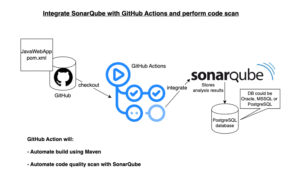
Similarly, SonarQube integrates AI to provide continuous code quality and security analysis. Its AI capabilities help in detecting complex security issues, offering developers actionable insights to remediate problems promptly.
Intelligent Secret Scanning
Exposing sensitive information like API keys or credentials in code repositories can lead to severe security breaches. AI enhances secret scanning by learning from vast datasets to recognise patterns indicative of secrets, even when they are obfuscated.
Snyk’s AI-powered tools can detect hardcoded secrets across various file types and programming languages, alerting developers before these secrets are committed to repositories. This proactive detection is crucial in preventing inadvertent exposures that could be exploited by malicious actors.
Automated Compliance and Policy Enforcement
Maintaining compliance with industry standards and internal policies is a continuous challenge. AI aids in automating compliance checks by continuously monitoring code and configurations against predefined policies.
Tools like SonarQube can enforce coding standards and security policies automatically, ensuring that every code change adheres to compliance requirements. This automation reduces the manual overhead associated with audits and helps in maintaining a consistent security posture across the organisation.
TheCodeV’s Commitment to AI-Driven DevSecOps
At TheCodeV, we understand the critical importance of integrating security seamlessly into the development process. Our expertise in DevSecOps automation leverages AI to enhance security scanning, vulnerability detection, and compliance enforcement without compromising on development speed.
We offer tailored solutions that incorporate tools like Snyk and SonarQube, ensuring that your applications are secure, compliant, and resilient against evolving threats. Whether you’re looking to integrate AI-driven security into your existing pipeline or build a new, secure development framework from scratch, our team is here to assist.
For businesses handling sensitive digital transactions, our e-Contract solutions provide secure, AI-enhanced platforms for managing contracts and agreements, ensuring data integrity and compliance.
The Double-Edged Sword: Ethical AI in DevOps
As Artificial Intelligence in DevOps becomes more embedded across automation pipelines, CI/CD systems, and infrastructure orchestration, organisations are encountering a new dimension of challenges—ethical and governance concerns. While AI offers unprecedented efficiency and predictive capabilities, it also introduces risks around transparency, bias, and over-reliance.
Understanding and addressing these concerns is crucial not just for compliance, but for maintaining trust, accountability, and long-term scalability.
Bias in AI Models and Automated Decisions
AI models learn from historical data—but when that data is incomplete, imbalanced, or reflects past systemic biases, the outcomes can be skewed. In DevOps, this can manifest in automated risk assessments unfairly flagging specific code patterns, or in biased prioritisation of tickets or incidents based on incomplete datasets.
For example, an AI tool might consistently deprioritise contributions from less active developers due to implicit weight given to commit frequency, inadvertently discouraging collaboration from junior team members.
At scale, such biases may lead to unfair resource allocation, flawed deployment triggers, and misleading performance evaluations.
Over-Dependence on AI: Losing Human Oversight
AI can automate and accelerate decision-making—but blind reliance on AI without human oversight can be dangerous. Teams may defer to AI-generated alerts or actions without verifying context or cross-checking potential consequences.
This is especially risky in high-stakes environments, where a misfired rollback, incorrect resource scaling, or false alert suppression could cause downtime or security breaches.
Transparency, Explainability & Auditability
In regulated industries or large enterprise environments, every system action—especially one triggered by AI—must be explainable and auditable. Unfortunately, many AI systems operate as “black boxes”, offering little clarity on why certain decisions were made.
In DevOps, where incident reports, compliance logs, and root cause analyses are crucial, lack of explainability can delay audits, impede RCA processes, and compromise accountability.
A recent IEEE study on AI ethics highlights the growing importance of explainable AI (XAI) in critical IT infrastructure, urging organisations to ensure every AI output is both traceable and interpretable by human operators Read More → (DoFollow).
TheCodeV’s Approach to Ethical AI in DevOps
At TheCodeV, we believe performance and ethics must go hand in hand. That’s why we help clients implement transparent, fair, and auditable AI systems that enhance DevOps without compromising integrity.
Our AI strategies emphasise:
Bias mitigation through diverse training data and regular validation
Explainability-first design using interpretable ML models and clear documentation
Human-in-the-loop oversight for critical automation processes
Audit logging for all AI-generated outputs and system actions
We also ensure full alignment with client policies, as outlined in our Privacy Policy and Terms & Conditions, to guarantee ethical compliance and legal clarity across every deployment.
AI in Action: Real Results from Smarter DevOps
Background
NovaEdge, a mid-sized SaaS company based in Manchester, provides cloud-based collaboration tools for remote teams. With a growing customer base across the UK and Europe, NovaEdge faced increasing pressure to accelerate deployment cycles while maintaining high availability and performance standards. However, their traditional DevOps setup—based on scripted CI/CD pipelines, manual infrastructure provisioning, and basic monitoring—was starting to show cracks.
Deployment failures were occurring roughly 1 in every 7 releases, incident resolution times exceeded 45 minutes, and engineering teams were suffering from alert fatigue and post-mortem backlogs. The CTO recognised the need for change and partnered with TheCodeV to implement an AI-enhanced DevOps solution.
The Challenge
NovaEdge had specific objectives:
Reduce deployment errors and downtime
Shorten feedback loops in the development pipeline
Improve system observability and response time
Ensure scalability without excessive manual intervention
Their infrastructure was containerised using Kubernetes, with Jenkins and GitHub Actions for CI/CD, and Splunk for log analysis. While technically sound, the environment lacked intelligent automation and adaptive monitoring.
TheCodeV’s AI-Driven DevOps Strategy
1. Predictive Build & Release Optimisation
We integrated AI plugins with Jenkins to analyse historical build logs. The system began flagging high-risk builds based on anomaly detection models, reducing failed deployments by over 60%. An AI-enhanced GitHub workflow rerouted flaky test cases and prioritised critical paths, cutting test cycle times from 18 minutes to under 10.
2. Intelligent Infrastructure Scaling
Using AI-driven forecasts based on traffic patterns and user behaviour, the infrastructure now auto-scales during peak usage periods. This led to a 30% reduction in cloud spend without sacrificing performance.
3. AI-Based Monitoring and Alerting
We replaced static thresholds with ML-based alerting using Datadog’s Watchdog. The system began clustering logs and performance anomalies, surfacing actionable alerts and suppressing noise. MTTR (Mean Time to Resolution) dropped from 47 minutes to just 18.
4. Secure Code Delivery with DevSecOps
SonarQube, enhanced with AI, was embedded into the pipeline to perform real-time vulnerability scanning. Meanwhile, Snyk flagged secret exposures during development, preventing potential breaches before code reached staging.
5. Collaborative ChatOps Integration
Slack bots powered by NLP were integrated for incident handling. A simple “status check” command in Slack now returns system health, rollout progress, and rollback options—reducing manual back-and-forth and speeding up decisions.
The Results
| Metric | Before AI Integration | After AI Integration |
|---|---|---|
| Deployment Failures | 1 in 7 releases | 1 in 20+ releases |
| Average Deployment Time | 25 minutes | 12 minutes |
| MTTR (Mean Time to Resolution) | 47 minutes | 18 minutes |
| Incident Alert Volume (per week) | 150+ | <60 (with clustering) |
| Cloud Spend Efficiency | Baseline | +30% efficiency |
NovaEdge’s engineering lead remarked,
“What once felt like a reactive process is now an intelligent, automated flow. Our DevOps pipeline feels less like firefighting and more like forecasting.”
Scaling Success with TheCodeV
At TheCodeV, we specialise in building AI-powered DevOps systems that help businesses like NovaEdge achieve real results—from faster delivery to tighter security and happier teams.
Looking to join a team at the forefront of DevOps innovation? Explore career opportunities on our Careers Page and shape the future of intelligent infrastructure with us.
The Future is Now: Elevate Your DevOps with AI
From accelerating software delivery and minimising downtime to fortifying security and enhancing team collaboration, Artificial Intelligence in DevOps is no longer a futuristic concept—it’s a present-day advantage. As demonstrated throughout this guide, AI transforms every stage of the DevOps lifecycle into a smarter, faster, and more resilient process.
Organisations that adopt AI-driven DevOps are not just improving operational efficiency—they’re gaining a significant competitive edge. They deploy faster, respond to incidents proactively, and innovate with confidence. Whether it’s predictive analytics preventing service disruptions, intelligent CI/CD pipelines reducing release times, or AI-powered DevSecOps strengthening code security, the impact is undeniable.
And the momentum is just beginning. As AI models become more sophisticated and tools more integrated, the future of DevOps lies in adaptive, autonomous systems that self-optimise, self-heal, and scale intelligently.
Partner with TheCodeV
At TheCodeV, we specialise in building intelligent DevOps architectures tailored to your business needs—merging AI, automation, and agile practices to maximise value and performance. From startups to scale-ups, our clients trust us to lead their DevOps transformation with clarity, speed, and strategy.
✅ Want to modernise your infrastructure?
✅ Looking to reduce deployment errors?
✅ Ready to integrate AI into your existing pipelines?
Let’s make it happen.
📞 Book a Free Consultation
🔗 Visit our Homepage to learn more about our AI and DevOps solutions
📩 Or simply contact us and start your journey toward smarter software delivery


2 Comments
[…] For organisations delivering complex systems worldwide, like those working with TheCodeV’s global clients, this intelligence ensures stability without slowing innovation.Learn more about how AI enhances DevOps workflows on our page about artificial intelligence in DevOps. […]
Your blog has become my go-to source for positive and uplifting content Thank you for consistently delivering high-quality posts