
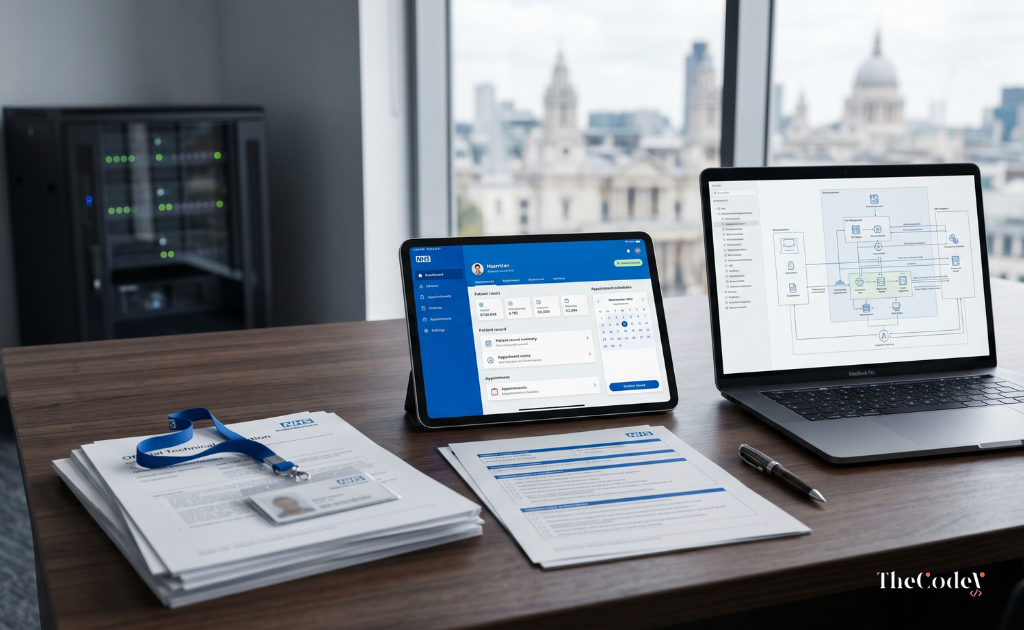
The Evolution of Digital Health: Navigating the UK NHS App Development Landscape
The landscape of medical technology in the United Kingdom is undergoing a profound structural shift. For technical leaders and engineering teams, the priority is no longer just building functional software. It is about building resilient systems that integrate seamlessly with established national infrastructure.
At the core of this transformation is the push for sophisticated nhs app development frameworks. Health systems require digital products that can handle vast amounts of sensitive patient data securely. This presents a unique architectural challenge for new entrants into the market.
The demand for high quality healthcare app development UK solutions has never been higher. As patient expectations rise, engineering teams must navigate complex regulatory environments. Building a successful product requires a deep understanding of strict compliance barriers.
Integrating with core NHS digital services means aligning with long term strategic goals at the national level. Startups cannot simply launch a minimum viable product and iterate later in the traditional sense. Every feature must be rigorously tested against clinical safety standards before deployment.
You can track the trajectory of these national priorities by reviewing the NHS App digital roadmap. This public trajectory outlines the strategic direction for patient facing tools. It provides crucial context for CTOs planning their technical architecture.
For healthtech startups UK ecosystems offer immense opportunity balanced by intense technical scrutiny. Building for this sector requires precision engineering and an unwavering commitment to data sovereignty. A robust technological foundation is strictly required to pass initial gateway checks.
This is where specialised engineering approaches become critical to project viability. Engaging in structured custom software development can significantly reduce time to market. It ensures that the core technical stack aligns with rigid national standards from day one.
The process of building a digital health product must be methodical and evidence based. Engineering leaders have to anticipate future interoperability requirements early in the software lifecycle. Reactive architecture will inevitably lead to costly compliance failures down the line.
Navigating this environment demands a shift from rapid prototyping to secure by design principles. It is a fundamental change in how software is conceptualised, tested, and delivered. Technical debt in this arena carries clinical risks alongside severe financial penalties.
As we examine the requirements for entering this highly regulated market, the technical hurdles become abundantly clear. The focus must remain on creating scalable applications that serve both the patient and the healthcare provider. Every line of code must be justifiable under strict clinical governance.
Understanding the baseline requirements is the first step for any ambitious technical team. The NHS operates on a rigorous trust model regarding new integrations and third party applications. Proving reliability is a continuous process rather than a one time certification event.
Founders must approach this market with a clear map of the technical and legal topography. Building a compliant healthcare application is an exercise in meticulous documentation and flawless execution. The barrier to entry is intentionally high to protect the integrity of national health data.
The Compliance Barrier: Understanding DTAC and the NHS Service Standard
Developing software for healthcare requires navigating strict assurance gateways before code ever reaches production. For engineering leaders undertaking nhs app development initiatives, understanding the regulatory landscape is non-negotiable. The baseline framework governing this space is the Digital Technology Assessment Criteria (DTAC).
In early 2026, NHS England introduced DTAC Version 2 to streamline the assessment process for software based health technologies. This update reduced the assessment questionnaire by a quarter by removing redundancies with other national standards. However, achieving DTAC compliance 2026 still demands rigorous documentation across five core operational pillars.
These five pillars encompass clinical safety, data protection, technical security, interoperability, alongside usability and accessibility. Evaluating these elements ensures that digital products are secure and suitable for use across health and social care settings. Startups must embed these criteria into their technical architecture from the earliest stages of planning.
Failing to build with the NHS service standard in mind inevitably leads to costly technical debt and delayed deployments. These standards require digital tools to be user centred, clinically safe, and technologically robust. They form the foundation of how public health bodies procure and deploy modern digital solutions.
When preparing for integration, CTOs should review the core NHS app integration standards to map out their data flows. Understanding these expectations early allows engineering teams to allocate resources accurately and avoid major architectural refactoring later. It shifts compliance from a final administrative hurdle to a continuous engineering principle.
Many healthtech firms struggle because they treat regulatory compliance as an afterthought rather than a core functional requirement. This is where comprehensive technical due diligence becomes essential before committing to a specific technology stack. Assessing your infrastructure against national criteria prevents teams from investing in non compliant cloud architectures.
Under the updated criteria, data protection remains one of the most heavily weighted and heavily scrutinised sections. Suppliers must confirm their compliance with the Data Security and Protection Toolkit and provide detailed ICO registration evidence. Transparent data processing agreements and clear data flow mapping are absolute requirements for any viable digital product.
Technical security also carries strict expectations, with mandatory alignment to the UK Software Security Code of Practice. Engineering teams must implement strong technical controls, including multi factor authentication for all administrative and remote access accounts. These controls must be demonstrable, documented, and consistently maintained across all deployment environments.
For software vendors, making strategic choices about proprietary code versus managed solutions impacts the speed of certification. Utilising a structured build vs buy framework helps determine which components to develop in house and which to procure. Leveraging pre certified cloud components can significantly accelerate the journey through the assessment gateway.
The updated guidelines clarify that even initial pilot programmes require completion of the baseline assessment documentation. Buyers within the health system maintain a low tolerance for digital risk and will reject applications lacking complete assurance evidence. Therefore, continuous validation must be integrated directly into your continuous deployment pipelines.
Engineering teams must treat the assessment criteria as an ongoing operational baseline rather than a static certificate. Every product update or significant architectural change triggers a need for revalidation against the national standards. Maintaining this posture requires a mature engineering culture dedicated to security, safety, and rigorous quality assurance.
Clinical Safety and Governance: Implementing DCB0129 and DCB0160
Clinical safety is the cornerstone of any medical software deployment in the UK. When engaging in nhs app development, teams must adhere to specific governance frameworks designed to prevent patient harm. The two primary standards that dictate this process are DCB0129 and DCB0160.
DCB0129 clinical safety standards are mandatory for manufacturers of health IT systems. This standard requires developers to identify and document potential clinical risks throughout the software lifecycle. It is not a check box exercise to be completed at the end of the project.
In contrast, DCB0160 applies to the NHS organisations that intend to implement the software. While the manufacturer manages the internal build risks, the deploying organisation must assess the risks within their specific clinical environment. This dual responsibility ensures that safety is managed from both a technical and operational perspective.
A central requirement of these standards is the appointment of a Clinical Safety Officer (CSO). This individual must be a registered clinician with relevant experience in health informatics. Their role is to provide clinical oversight and ensure that risk mitigation strategies are clinically sound.
The CSO is responsible for maintaining a hazard log healthcare IT professionals use to track potential risks. This log serves as a living document that records every identified hazard alongside its severity and likelihood. For each hazard, the team must implement specific controls to reduce the risk to an acceptable level.
Integrating these requirements into a modern development workflow can be challenging for agile teams. However, aligning these safety checks with established devsecops best practices creates a more streamlined path to compliance. Treating safety as code allows for automated validation of certain clinical constraints.
Every release must be accompanied by a Clinical Safety Case Report. This document provides a summary of the clinical safety evidence and justifies why the system is safe to use. It must clearly outline any residual risks and provide instructions for safe operation within a clinical setting.
The process of developing these documents requires close collaboration between engineers and clinical experts. It is a rigorous multidisciplinary effort that starts during the requirements phase and continues through decommissioning. Without a robust Clinical Safety Management Plan, a product will not pass the necessary assurance audits.
For more detailed information, developers should consult the official NHS clinical safety assurance guidelines. This resource provides a deep dive into the expectations for manufacturers and health organisations. Understanding these nuances is critical for long term product viability.
For startups, navigating these requirements often necessitates external expertise to avoid common pitfalls. Seeking a professional consultation can help clarify the specific safety deliverables required for your unique use case. It ensures that your clinical safety strategy is both compliant and practical.
Effective governance also involves a cultural shift within the engineering team. Developers must understand that their code impacts real world clinical outcomes. This awareness fosters a more cautious and thorough approach to building and testing health technologies.
Ultimately, DCB0129 and DCB0160 are about building trust through transparency. By rigorously documenting and mitigating risks, manufacturers demonstrate their commitment to patient safety. This commitment is the primary factor that NHS procurement leads look for when evaluating new digital partners.
Data Sovereignty and Security: Meeting NHS Cyber and GDPR Benchmarks
Handling sensitive patient information demands a robust architectural approach prioritising data sovereignty. For healthtech companies entering the UK market, protecting digital assets goes beyond standard commercial security protocols. Strict legal and operational frameworks govern how medical information is stored, processed, and transmitted.
The cornerstone of this regulatory environment is navigating UK GDPR healthcare requirements. Patient records fall under special category data, which commands the highest level of legal protection under current legislation. Engineering teams must design databases that inherently respect these elevated privacy thresholds from inception.
Before any software can interact with national infrastructure, vendors must achieve complete DSP Toolkit compliance. The Data Security and Protection Toolkit is an online self assessment tool mandatory for all organisations accessing NHS data. It provides undeniable proof that your security practices meet the stringent baseline set by the National Data Guardian.
Successful nhs app development relies heavily on demonstrating continuous adherence to these national standards. It is not sufficient to simply encrypt data at rest and in transit. Developers must implement granular, role based access controls and maintain immutable audit logs for every system interaction.
Technical teams should closely follow the official UK Software Security Code of Practice during the build phase. This guidance outlines the fundamental security principles required to protect applications against modern cyber threats. Embedding these practices early prevents catastrophic vulnerabilities from reaching production environments.
Choosing the right hosting infrastructure is a critical decision affecting long term compliance and scalability. Health data must remain within approved geographic boundaries to satisfy strict data sovereignty laws. Relying on properly configured container orchestration, such as kubernetes for startups, helps maintain rigid data isolation while allowing for rapid scaling.
However, architecting highly secure, compliant environments often leads to rapidly escalating infrastructure expenses. Engineering leaders must balance the need for military grade encryption and redundant storage with sustainable financial modelling. Implementing strategic cloud cost optimization ensures that security protocols do not bankrupt early stage ventures.
NHS data protection policies also require clear protocols for data retention and secure deletion. Systems must automatically purge historical records once the legal justification for holding them expires. Building these automated lifecycle management tools directly into the application architecture is a non negotiable engineering task.
Cyber security in healthtech requires a proactive stance against emerging threats and potential data breaches. Regular penetration testing and continuous vulnerability scanning must be integrated into the deployment pipeline. A reactive approach to security patching is unacceptable when dealing with critical public health infrastructure.
Ultimately, data sovereignty is about maintaining absolute control and visibility over every byte of patient information. Startups must prove they can guard this data against both external attackers and internal mishandling. Trust is the currency of digital health, and rigorous security architecture is the only way to earn it.
Architecting for Connectivity: Interoperability and NHS Login Integration
Interoperability is the primary mechanism for breaking down data silos within the UK health system. For engineering teams, nhs app development success depends on how effectively a product communicates with external registries and clinical systems. Building a standalone application without connectivity is no longer a viable strategy for modern HealthTech.
The foundational standard for data exchange in the UK is HL7 FHIR NHS specifications. Fast Healthcare Interoperability Resources (FHIR) provides a standardised framework for sharing electronic health records safely. Implementing these protocols ensures that your application remains compatible with the wider digital health ecosystem.
Identity management is the next critical pillar for any patient facing tool. Integrating with the official NHS login service provides users with a secure and familiar way to access health digital services. It removes the friction of creating new accounts while leveraging the national identity verification infrastructure.
Developers can find technical specifications and onboarding guides in the NHS login API catalogue. Using this central authentication provider increases user trust and ensures that data access is strictly controlled. It is a mandatory requirement for products that seek high levels of integration with patient records.
Achieving this level of connectivity often requires a rethink of legacy architectural patterns. Rigid, all in one systems struggle to adapt to the frequent updates required by national APIs. Many teams find success by shifting from monolith to microservices to isolate integration logic from core business features.
This modular approach allows for independent scaling of different system components. It also simplifies the testing process for complex data flows between your app and national databases. A decoupled architecture is inherently more resilient to changes in external API specifications.
Adopting a composable architecture for startups further enhances this flexibility. By treating integrations as interchangeable modules, you can quickly pivot to support new healthcare interoperability standards UK requirements. This foresight prevents major architectural bottlenecks as your product matures.
Real time data synchronisation is another area where modern apps must excel. Patients expect their data to be consistent across different platforms and providers. Engineering teams must implement robust handling for asynchronous data updates to maintain this consistency.
Security during the data exchange process is non negotiable. Every API call must be authenticated and authorised according to national security profiles. Using industry standard protocols like OAuth 2.0 and OpenID Connect is essential for maintaining a secure communication channel.
Ultimately, connectivity is what transforms a simple app into a powerful clinical tool. By embracing open standards and national identity services, developers contribute to a more unified health service. This strategic alignment with national infrastructure is what defines the next generation of UK digital health.
The Tech Stack for HealthTech: Balancing Innovation with Reliability
Selecting a technology stack for nhs app development is a strategic decision that extends far beyond developer preference. In the healthcare sector, the primary conflict often lies between the desire for modern, high performance features and the absolute necessity for system stability. Engineering leaders must choose tools that facilitate rapid iteration without compromising the clinical integrity of the application.
The choice of frontend framework significantly impacts the long term maintainability of your digital health product. When evaluating the best frameworks for healthcare apps in 2026, teams must consider ecosystem maturity and security support. React and Next.js continue to lead the market due to their robust component models and extensive libraries for data handling. These frameworks allow for the creation of responsive, accessible interfaces that meet national usability standards.
For mobile specific deployments, the debate between native and cross platform remains central to the product roadmap. While native development offers the highest performance, cross platform solutions like React Native or Flutter provide significant speed to market advantages. Understanding the nuances of native vs cross platform app development is essential when targeting diverse user bases across the NHS. The priority must be a consistent, reliable experience regardless of the hardware used by the patient or clinician.
Reliability is especially critical when the software falls under the classification of medical device software development. If your application provides diagnostic or treatment recommendations, it may be subject to additional UKCA marking requirements. This necessitates a tech stack that supports rigorous unit testing, predictable state management, and clear audit trails. Every technical choice must be justifiable during a clinical safety audit or regulatory inspection.
On the backend, architecture must be designed for high availability and secure data processing. Relying on typed languages like TypeScript or Go can reduce runtime errors that might lead to data corruption. A well defined API layer is also necessary to handle the complex data structures required for interoperability with national health records. Performance must be optimised for clinical environments where network connectivity may be inconsistent or low bandwidth.
Database selection should also reflect the sensitivity of the data being handled. While relational databases are often the default for structured patient records, some health data may benefit from NoSQL flexibility. Regardless of the choice, the database must support advanced encryption and granular access control. Technical teams should prioritise platforms that offer robust data residency options within the United Kingdom to satisfy sovereignty rules.
Furthermore, the tech stack must facilitate automated quality assurance. Continuous integration pipelines should include automated security scanning and clinical constraint validation as standard. This ensures that every code change is vetted against the strict safety benchmarks established during the initial design phase. A manual heavy testing process is too slow and prone to human error for modern HealthTech requirements.
Ultimately, the best stack is one that provides a stable foundation for growth while allowing for technical agility. Avoid overly experimental libraries that lack a long term support roadmap or a clear security history. Your architecture should be boring in its reliability but modern in its efficiency and user experience. This balance ensures that your product remains functional and compliant throughout its entire lifecycle.
Success in this sector requires a mindset shift from building fast to building correctly. Every technical decision must be filtered through the lens of patient safety and data security. By choosing mature, well supported technologies, engineering teams can focus on solving complex clinical problems rather than fighting infrastructure instability. This disciplined approach to technology selection is what separates sustainable health startups from those that fail at the first hurdle of national integration.
From Sandbox to Live: Navigating the NHS Digital Assessment Process
The journey from a local development environment to a live clinical setting is a rigorous multi stage process. For teams focused on nhs app development, the transition begins within a controlled sandbox environment. This allows engineers to test their integrations against mock data before moving to production level systems.
The NHS Digital assessment process is designed to verify that every technical and clinical standard has been met. This is not a linear path but rather a series of iterative reviews that demand transparency and high quality documentation. Developers must provide clear evidence of their testing protocols and security measures throughout the lifecycle.
Navigating this path requires a strategic approach to product maturity and engineering discipline. Many successful firms start with rapid MVP development healthcare strategies to validate core features within the sandbox. This allows for early feedback from NHS evaluators without committing to a full scale deployment prematurely.
The sandbox phase is critical for identifying potential integration bottlenecks before they impact real users. It provides a safe space to simulate various clinical scenarios and stress test the application performance under load. Successfully passing through the sandbox is a major milestone that signals technical readiness for the next stage.
Once the sandbox phase is complete, the application enters the formal assessment phase. This involves a deep dive into the product clinical safety, data protection, and technical security pillars. Evaluators will scrutinise every aspect of the submission, from the code quality to the clinical safety case report.
Understanding the mobile app development costs associated with this level of scrutiny is vital for financial planning and investor relations. The assessment process can be time consuming and may require significant engineering resources to address granular feedback. Budgeting for these iterative cycles is essential for project sustainability and long term growth.
The NHS app library submission process also demands a focus on user experience and accessibility. Applications must be intuitive and inclusive, ensuring they are usable by the widest possible demographic in the UK. Failure to meet these design standards can lead to rejection, regardless of the underlying technical merit.
Throughout this process, developers should refer to the official integration standards for the most current requirements. These guidelines are updated regularly to reflect changes in national policy and emerging technical best practices. Staying aligned with these updates reduces the risk of non compliance during the final review stage.
The final move to a live environment is a collaborative effort between the developer and the NHS commissioning body. It requires a final sign off on all clinical safety and security documentation from the relevant authorities. Once live, the product must be continuously monitored to ensure it remains safe and effective in a real world setting.
This assessment journey is designed to uphold the high standards of the UK digital health infrastructure. While the process is demanding, it ensures that only the most reliable and secure tools reach patients. For engineering teams, successfully navigating this path is a testament to their technical excellence and commitment to public safety.
The Future of NHS Integration: Scaling Beyond the Initial Deployment
Scaling a healthtech product within the UK ecosystem requires a shift from survival to strategic expansion. Initial nhs app development success often focuses on meeting the immediate requirements of the Digital Technology Assessment Criteria. However, the true challenge for scaling healthtech startups UK wide is maintaining those standards as the user base grows and the product matures.
Technical leaders must anticipate how their architecture will handle increased loads and more complex data interactions. A system that passed the initial sandbox assessment may struggle when integrated into several trusts simultaneously. Continuous performance monitoring and regular security audits become essential parts of the operational routine rather than one off events.
The future of NHS digital infrastructure is moving toward even deeper integration and automated care pathways. We are seeing a trend where patient data is used more proactively to predict health outcomes and personalise interventions. Staying aligned with the NHS App roadmap allows engineering teams to prepare for these shifts well in advance.
Future updates are likely to focus on expanding the capabilities of the NHS Login and improving cross regional data sharing. Startups that build with modularity in mind will be better positioned to adopt these changes without major structural overhauls. This adaptability is a key competitive advantage in a market where regulations are constantly being refined.
Business framing for long term success involves more than just keeping the lights on. It requires a culture of engineering excellence that prioritises clinical safety alongside innovation. Founders must ensure that their technical roadmaps account for the ongoing cost of compliance and the need for continuous clinical oversight.
As the digital health landscape evolves, the relationship between developers and national health bodies will become more collaborative. Open dialogue and participation in national pilot programmes can provide early insights into upcoming changes. This proactive engagement helps mitigate the risk of being sidelined by sudden shifts in policy or technical standards.
The path to market leadership in UK healthtech is a marathon rather than a sprint. It demands a persistent focus on quality assurance and a deep understanding of the unique constraints of the NHS. Engineering teams that can master this complexity will find significant opportunities to improve patient outcomes at scale.
For many engineering leaders, the complexities of national integration can feel overwhelming during the growth phase. If you are looking to refine your technical strategy or scale your existing infrastructure, we can help. You may wish to begin by completing our initial development questionnaire to help us understand your current technical challenges.
Building resilient, compliant, and scalable health technology is at the heart of what we do at TheCodeV. Our team provides the strategic engineering support needed to navigate the evolving UK healthcare landscape with confidence. To discuss your project requirements in more detail, contact us today for a consultation with our senior architects.